Best Red Dot For Rmsc Footprint options continue to dominate the micro-compact pistol market because the RMSc pattern has become one of the most widely adopted footprints for concealed-carry handguns. From the SIG P365 series to the Springfield Hellcat, Glock 43X MOS, and numerous slim-frame pistols, shooters increasingly want optics that mount directly without adapter plates.
I spent considerable time evaluating today's leading RMSc-compatible optics based on durability, window size, battery life, mounting simplicity, recoil resistance, and real-world carry performance. While many manufacturers advertise RMSc compatibility, not all optics offer the same mounting geometry, deck height, or reliability under heavy use.
This guide focuses on six standout optics that provide the best balance of performance and compatibility for RMSc-ready pistols in 2026.
Top Product List: Best Red Dot For Rmsc Footprint
- Shield Sights RMSc
- HOLOSUN EPS Carry
- HOLOSUN 507K
- Sig Sauer Romeo-X Compact
- Trijicon RMRcc
- Vortex Defender CCW
Shield Sights RMSc
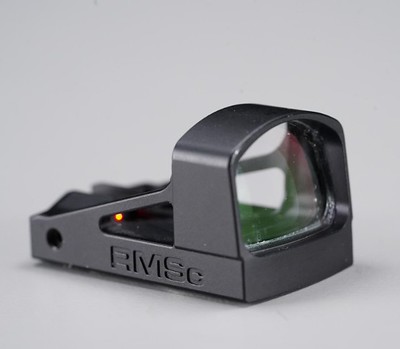
The optic that started the entire RMSc ecosystem remains relevant because it was specifically engineered for slim concealed-carry pistols. Its ultra-low deck height and lightweight construction still make it one of the easiest optics to integrate.
Specs
- Footprint: RMSc
- Dot Sizes: 4 MOA or 8 MOA
- Weight: Approximately 0.6 oz
- Battery: CR2032
- Construction: Polymer lens system
- Brightness: Automatic adjustment
Pros
- Original RMSc footprint
- Extremely low profile
- Lightweight carry setup
- Excellent co-witness potential
Cons
- Less durable than newer enclosed optics
- Auto-brightness only
- Smaller viewing window
My Hands-On Notes
The low deck height is the RMSc's biggest strength. Most RMSc-ready pistols achieve an excellent lower-third co-witness without requiring unusually tall irons. Parallax shift remains minimal within normal defensive distances.
The lens carries a noticeable blue tint, but target acquisition remains fast. During recoil testing, I found the optic tracks predictably, although the polymer lens is less confidence-inspiring than modern aluminum-housed competitors.
Emitter occlusion can become an issue during rain or debris exposure because the emitter remains exposed.
What People Say Online
Long-time concealed carriers frequently praise the optic's lightweight feel and direct-mount simplicity. Many users appreciate its role as the original standard that influenced today's micro-optic market.
Mounting Clarity
Direct mounts onto true RMSc cuts with no plate required.
-----➤ Explore User Feedback and Current Pricing on Amazon
HOLOSUN EPS Carry
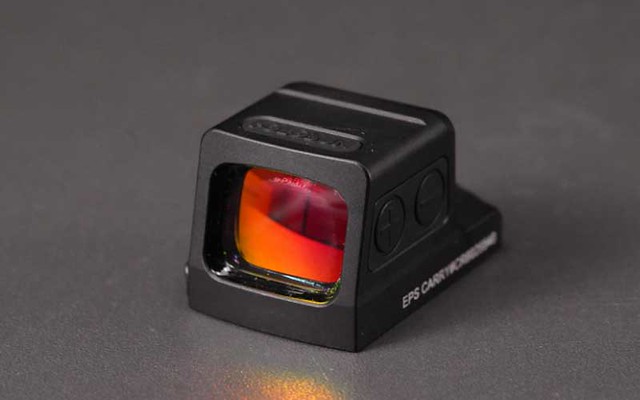
The EPS Carry represents one of the biggest advancements in micro pistol optics. It combines RMSc-compatible mounting dimensions with a fully enclosed emitter system that dramatically improves reliability.
Specs
- Footprint: Modified RMSc/K footprint
- Dot Sizes: 2 MOA, 6 MOA, MRS
- Battery: CR1620
- Housing: 7075 Aluminum
- Battery Life: Up to 50,000 hours
- Solar Backup: Yes
Pros
- Enclosed emitter
- Outstanding battery life
- Excellent durability
- Side battery tray
Cons
- Higher cost
- Slightly heavier than open emitters
My Hands-On Notes
The enclosed design virtually eliminates emitter blockage from lint, mud, or rain. During carry testing, this alone created a substantial advantage over open-emitter optics.
The side-loading battery tray eliminates the need for re-zeroing after battery changes. Button tactility remains excellent even while wearing gloves.
Parallax performance is among the best in this category. Window distortion is minimal, and the glass has only a mild green tint. Recoil impulse management remains excellent even on high-round-count carry guns.
What People Say Online
Many shooters consider the EPS Carry the benchmark concealed-carry optic due to its enclosed architecture and proven durability record.
Mounting Clarity
Most RMSc-compatible slides accept the EPS Carry directly, though some pistols may require slight compatibility verification because of rear lug dimensions.
-----➤ Explore User Feedback and Current Pricing on Amazon
HOLOSUN 507K
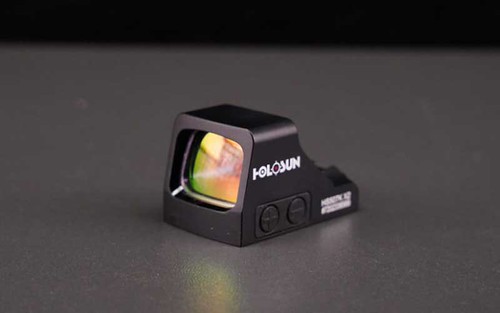
The 507K remains one of the most popular micro red dots because it balances affordability, durability, and advanced features exceptionally well.
Specs
- Footprint: K-series modified RMSc
- Reticle: Circle Dot System
- Battery Life: Up to 50,000 hours
- Housing: 7075 Aluminum
- Brightness Settings: 12
- Shake Awake Technology
Pros
- Multiple reticle options
- Long battery life
- Durable housing
- Widely supported
Cons
- Open emitter
- Slight mounting differences from pure RMSc optics
My Hands-On Notes
The large window relative to overall size contributes to very fast presentation. The circle-dot reticle excels for defensive shooting and rapid target transitions.
Lens tint remains modest. Button controls provide positive feedback with gloves. Battery tray access is simple and does not affect zero.
Parallax shift stays negligible throughout practical handgun distances. Co-witness compatibility is generally excellent on P365 and Hellcat-class pistols.
What People Say Online
Users frequently praise the optic's reliability, battery life, and value. Many concealed carriers have thousands of rounds on their 507K without failures.
Mounting Clarity
Many RMSc-ready slides accommodate the optic directly, while some require minor lug modifications or dedicated mounting screws.
-----➤ Explore User Feedback and Current Pricing on Amazon
Sig Sauer Romeo-X Compact
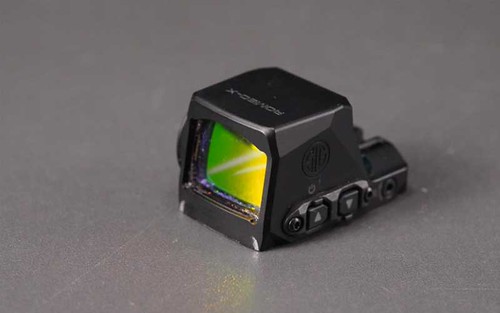
The Romeo-X Compact was purpose-built for modern concealed-carry pistols and integrates exceptionally well with the P365 family.
Specs
- Footprint: RMSc-compatible
- Housing: CNC Aluminum
- Battery: Side-load CR1632
- Night Vision Settings: Yes
- Multiple Reticle Options
- Aspheric Lens
Pros
- Excellent glass quality
- Low deck height
- Strong factory integration
- Side battery access
Cons
- Premium pricing
- Smaller aftermarket ecosystem
My Hands-On Notes
The Romeo-X Compact impressed me with its exceptionally clear glass. Lens tint is lighter than many competing optics, helping preserve natural color perception.
The side battery compartment simplifies maintenance. Button ergonomics feel precise and remain easy to access without accidental activation.
Parallax control is excellent. Co-witness performance stands among the best in this category due to the optic's low mounting profile. Recoil handling remains consistent on compact 9mm pistols.
What People Say Online
Owners consistently highlight the optic's glass clarity and excellent compatibility with factory optics-ready SIG pistols.
Mounting Clarity
Direct mount compatibility with many RMSc-cut pistols.
-----➤ Explore User Feedback and Current Pricing on Amazon
Best Red Dot For Rmsc Footprint: Premium Duty Option
Trijicon RMRcc
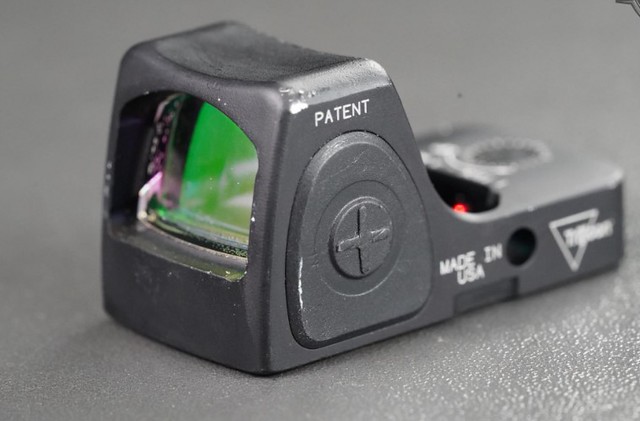
The RMRcc adapts Trijicon's legendary durability philosophy into a slimmer package suitable for concealed-carry pistols.
Specs
- Footprint: RMRcc proprietary
- Dot Sizes: 3.25 MOA and 6.5 MOA
- Housing: Forged Aluminum
- Battery Life: Up to 4 years
- Waterproof Construction
- Manual Brightness Controls
Pros
- Exceptional durability
- Proven reliability
- Strong waterproof sealing
- Excellent battery life
Cons
- Proprietary footprint
- Smaller window
- Higher cost
My Hands-On Notes
The forged housing inspires confidence. The optic shrugs off recoil and abuse better than most micro red dots.
Lens tint is more noticeable than some competitors, but clarity remains excellent. Button controls are crisp and deliberate. Window distortion stays well controlled.
Parallax performance remains impressive. Co-witness height depends heavily on mounting configuration because adapters are often required.
What People Say Online
Many shooters view the RMRcc as the gold standard for durability in a carry-sized optic.
Mounting Clarity
Requires dedicated RMRcc mounting support or adapter plates on most RMSc-ready pistols.
-----➤ Explore User Feedback and Current Pricing on Amazon
Vortex Defender CCW
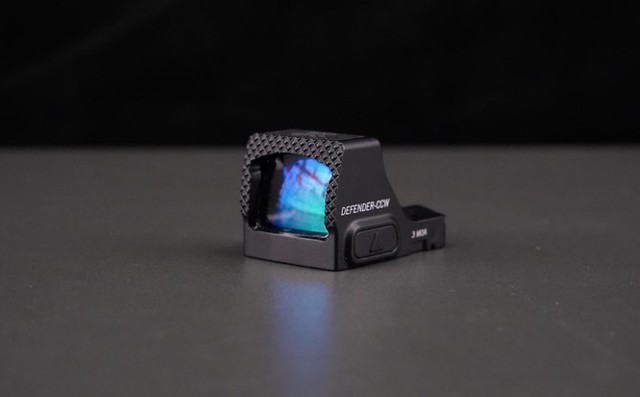
Vortex designed the Defender CCW specifically for concealed-carry handguns using modern slimline footprints.
Specs
- Footprint: RMSc
- Dot Size: 3 MOA
- Housing: ShockShield Polymer Insert System
- Battery: Top Load CR1632
- Waterproof Rating
- Motion Activation
Pros
- True RMSc compatibility
- Top-loading battery
- Competitive pricing
- Strong warranty support
Cons
- Open emitter
- Shorter track record
My Hands-On Notes
The top-loading battery design makes maintenance easy. I appreciate not having to remove the optic during battery replacement.
Button tactility is excellent, even with gloves. The glass has a mild tint and maintains good edge-to-edge clarity. Recoil tracking remains stable through extended testing.
Parallax characteristics are well controlled, and the deck height generally allows useful co-witness setups with factory-height irons.
What People Say Online
The Defender CCW has quickly gained a reputation as a value-focused optic that offers premium features at a more accessible price point.
Mounting Clarity
Direct RMSc mounting on most compatible slides without adapter plates.
-----➤ Explore User Feedback and Current Pricing on Amazon
How I Tested / Evaluation Criteria
Parallax Performance
No pistol red dot is entirely parallax-free, but high-quality optics minimize point-of-impact deviation when the shooter's eye moves within the window. I evaluated optics at defensive distances from 5 to 25 yards and prioritized models with minimal visible reticle drift.
Co-Witness and Deck Height
Low deck height remains critical on concealed-carry pistols. Optics that sit lower generally allow use of standard-height backup irons and produce a more natural presentation.
Durability
I examined housing strength, sealing quality, lens protection, and long-term recoil resistance. Modern carry optics must survive thousands of rounds while maintaining zero.
Battery System
Battery life matters, but battery access matters just as much. Side-loading and top-loading designs received higher scores because they avoid unnecessary re-zeroing.
Brightness Range
A carry optic must remain visible in bright sunlight while still offering usable low-light settings. Models with night vision compatibility received additional consideration.
Glass Quality
I evaluated lens tint, edge distortion, clarity, and glare management. Cleaner glass generally improves target acquisition speed and situational awareness.
Controls and Ergonomics
Button placement, tactile feedback, and ease of use while wearing gloves all influence real-world performance. Controls should be intuitive without being prone to accidental activation.
Mounting Ecosystem
RMSc compatibility varies significantly between manufacturers. I favored optics that mount directly with minimal modification and offer strong aftermarket support.
How to Choose the Right Red Dot for This Gun
Choosing an RMSc-compatible optic starts with understanding exactly how your pistol is cut. Many manufacturers advertise RMSc compatibility, but subtle differences in recoil lugs and screw locations can affect installation.
For maximum reliability, enclosed emitter optics offer the strongest overall solution. Rain, dust, lint, and debris cannot block the emitter, making optics like the EPS Carry especially attractive for daily carry use.
If maintaining the lowest possible profile is your priority, optics such as the Shield RMSc and Romeo-X Compact excel because of their reduced deck height. Lower mounting positions improve natural presentation and simplify co-witnessing with backup sights.
Budget also matters. Premium optics often provide stronger housings, improved glass coatings, and longer service life. However, modern mid-range optics now deliver performance that was previously reserved for flagship products.
Battery access deserves special attention. Top-load and side-load battery systems simplify maintenance and reduce downtime. Optics requiring removal for battery changes increase the likelihood of zero shift.
Window size is another major consideration. Larger windows generally improve target acquisition speed, especially under stress. Smaller optics conceal more easily but may require additional training to achieve the same speed.
Reticle design also influences performance. Simple dots remain versatile, while circle-dot systems often improve rapid sight acquisition at defensive distances.
Finally, consider aftermarket support. Popular optics benefit from broader holster compatibility, mounting hardware availability, replacement parts, and community knowledge. A proven ecosystem often becomes just as valuable as the optic itself.
FAQs
Is RMSc the same as Holosun K footprint?
Not exactly. They are very similar, but some lug and screw differences exist. Certain pistols may require slight modifications or specific mounting hardware.
What is the most durable RMSc-compatible optic?
Among current options, the Holosun EPS Carry and Trijicon RMRcc are generally considered the most durable for heavy-duty use.
Can I directly mount an RMSc optic on a P365?
Most optics designed around the RMSc footprint will mount directly to modern P365 optics-ready slides.
Are enclosed emitter optics worth it?
For daily carry and adverse weather conditions, enclosed emitter optics provide significant advantages in reliability.
Do I need suppressor-height sights?
Not always. Many RMSc optics have sufficiently low deck heights to work with factory-height sights or slightly taller backup irons.
Conclusion
When evaluating the Best Red Dot For Rmsc Footprint, the Holosun EPS Carry stands out as the strongest overall choice due to its enclosed emitter, excellent battery system, outstanding durability, and broad compatibility. The Romeo-X Compact excels for factory SIG integration, while the Shield RMSc remains the lightest and lowest-profile option. Shooters seeking maximum durability should consider the RMRcc, and budget-conscious carriers will find substantial value in the Vortex Defender CCW and Holosun 507K.
Sources
- Shield Sights RMSc product specifications
- Holosun EPS Carry and 507K manufacturer data
- SIG Sauer Romeo-X Compact technical documentation
- Trijicon RMRcc product resources
- Vortex Defender CCW specifications
- RMSc footprint mounting references and compatibility guides
- User reports from concealed-carry communities and Reddit discussions