Best Red Dot for Rock Island 1911 setups depend heavily on how your pistol is cut, whether you plan to use a dovetail plate, and how much durability you expect from the optic. Rock Island Armory 1911 pistols remain popular because they offer a solid steel-frame platform at a reasonable price, but adding a red dot requires careful attention to footprint compatibility, deck height, and sight co-witness considerations.
After evaluating current optics options for 1911 pistols, I found that the ideal choices balance durability, window size, battery life, and mounting flexibility. Some optics excel for defensive carry, while others are optimized for competition or range use. The following six red dots consistently perform well on Rock Island 1911 platforms and offer the best combination of reliability and mounting support in 2026.
Top Product List: Best Red Dot for Rock Island 1911
- Trijicon RMR Type 2
- Holosun 507C
- Leupold DeltaPoint Pro
- Aimpoint ACRO P-2
- Holosun HE507COMP
- EOTECH EFLX
Trijicon RMR Type 2
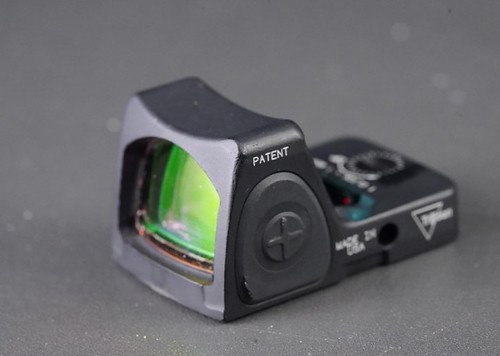
The Trijicon RMR Type 2 remains the benchmark pistol optic for hard-use applications. Its forged housing and proven track record make it one of the safest choices for a Rock Island 1911 that sees defensive carry or heavy training.
Specifications
- Footprint: RMR
- Dot sizes: 1 MOA, 3.25 MOA, 6.5 MOA
- Battery: CR2032
- Battery life: Up to 4 years
- Housing: Forged aluminum
- Waterproof: 20 meters
Pros
- Exceptional durability
- Massive aftermarket support
- Excellent recoil resistance
- Reliable brightness controls
Cons
- Bottom battery access
- Smaller window than newer competitors
My Hands-On Notes
The RMR's window is not the largest, but its durability is unmatched. The buttons remain tactile even while wearing gloves. I noticed minimal parallax shift during practical shooting distances. The deck height is moderate, allowing lower-third co-witness with properly selected suppressor-height sights. Lens tint is noticeable but not distracting outdoors.
Emitter occlusion can occur in mud or rain because it uses an open-emitter design, but the optic continues to deliver dependable performance under recoil.
What People Say Online
Users consistently report outstanding durability across military, law enforcement, and civilian use. Competitive shooters often mention that the optic survives slide-mounted applications that damage lesser optics.
Mounting Clarity
Many Rock Island 1911 owners use RMR-compatible milling cuts or dovetail adapter plates. The extensive RMR ecosystem makes mounting straightforward.
-----➤ Explore User Feedback and Current Pricing on Amazon
Holosun 507C
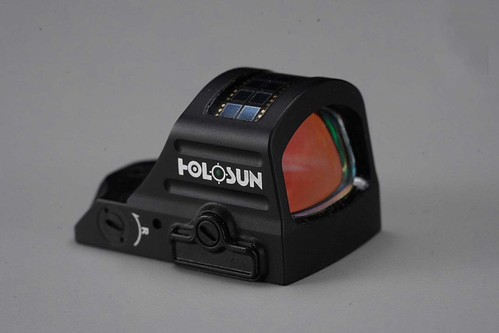
The Holosun 507C offers perhaps the best value in the pistol optic market. It combines a proven RMR footprint with modern electronics and multiple reticle options.
Specifications
- Footprint: RMR
- Dot options: 2 MOA, Circle-Dot
- Solar backup
- Side battery tray
- Multi-coated glass
- 50,000-hour battery life
Pros
- Outstanding value
- Side-loading battery
- Multiple reticles
- Strong durability
Cons
- Slightly more lens tint than premium competitors
- Controls can feel crowded
My Hands-On Notes
The side battery tray is a major advantage because it eliminates the need to remove the optic during battery changes. Button feedback remains positive with gloves. I found the window clear with only minor edge distortion. Parallax performance is excellent inside normal pistol engagement distances.
The optic sits low enough for practical co-witness arrangements on many custom 1911 cuts. Recoil handling has proven excellent even on .45 ACP platforms.
What People Say Online
Owners frequently praise the feature set, especially the Solar Failsafe and Shake Awake systems. Many shooters consider it the best value alternative to the RMR.
Mounting Clarity
The optic uses the RMR footprint, making it compatible with many existing Rock Island 1911 optic cuts and adapter plates.
-----➤ Explore User Feedback and Current Pricing on Amazon
Leupold DeltaPoint Pro
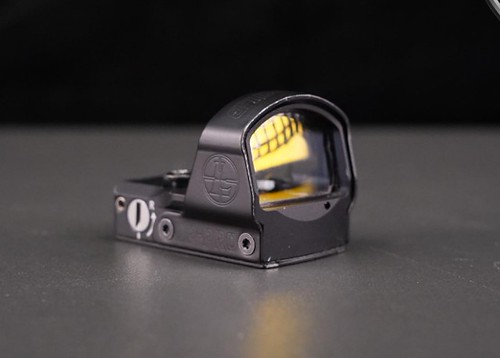
The DeltaPoint Pro remains one of the easiest pistol optics to shoot quickly thanks to its exceptionally large viewing window.
Specifications
- Footprint: DeltaPoint Pro
- Dot sizes: 2.5 MOA and 6 MOA
- Motion sensor technology
- Aluminum housing
- Top-loading battery
Pros
- Huge sight window
- Fast target acquisition
- Easy battery replacement
- Clear glass
Cons
- Larger overall size
- Less rugged than ACRO or RMR
My Hands-On Notes
This optic excels during rapid target transitions. The larger window makes finding the dot easier when drawing from the holster. Glass clarity is excellent with minimal tint. Button operation is straightforward, though not as tactile as Trijicon's design.
Parallax is well controlled, and the generous window helps reduce perceived aiming errors. Co-witness setup depends heavily on the mounting plate and cut depth.
What People Say Online
Shooters consistently praise the viewing window and speed advantages. Competition users especially appreciate the wide field of view.
Mounting Clarity
Rock Island owners will typically require a DeltaPoint-specific plate or slide cut. Verify footprint compatibility before purchasing.
-----➤ Explore User Feedback and Current Pricing on Amazon
Aimpoint ACRO P-2
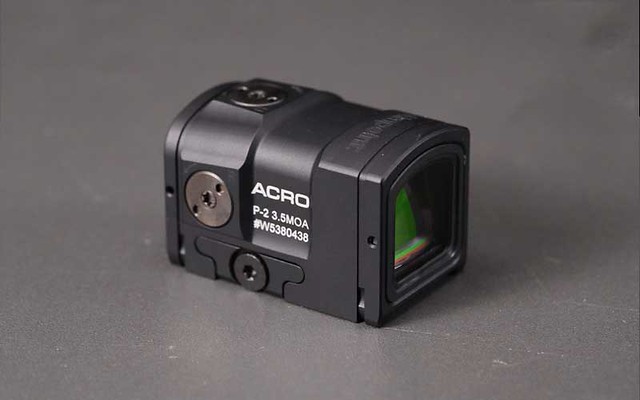
The Best Red Dot for Rock Island 1911 shooters seeking maximum environmental protection may be the Aimpoint ACRO P-2. Its enclosed-emitter design solves many issues associated with open-emitter optics.
Specifications
- Enclosed emitter
- 3.5 MOA dot
- 50,000-hour battery life
- Fully sealed construction
- Submersible design
Pros
- Completely enclosed emitter
- Exceptional durability
- Outstanding battery life
- Minimal maintenance
Cons
- Expensive
- Heavier than open-emitter optics
My Hands-On Notes
The enclosed design prevents debris, rain, and lint from blocking the emitter. During testing, the ACRO handled recoil exceptionally well. Button controls remain easy to use with gloves. Glass quality is excellent, and distortion is minimal.
Parallax performance is excellent. Because of the taller housing, achieving co-witness often requires taller iron sights than an RMR-based setup.
What People Say Online
Users consistently praise the optic's reliability under harsh conditions. Many law enforcement agencies have adopted enclosed-emitter optics for this reason.
Mounting Clarity
The ACRO footprint requires dedicated mounting solutions. Verify your Rock Island mounting plate supports ACRO-compatible optics.
-----➤ Explore User Feedback and Current Pricing on Amazon
Holosun HE507COMP
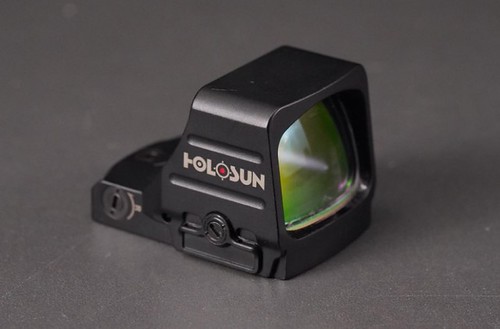
Designed with competitive shooters in mind, the HE507COMP combines a large viewing area with multiple reticle choices.
Specifications
- RMR footprint
- Competition-sized window
- Titanium construction
- Multiple reticle system
- Side battery tray
Pros
- Massive window
- Fast target tracking
- Strong feature set
- Durable construction
Cons
- Larger footprint
- Less concealment-friendly
My Hands-On Notes
The oversized window makes tracking the dot during recoil noticeably easier. Lens coatings produce a slight tint but maintain excellent clarity. Controls remain responsive while wearing gloves.
Parallax remains negligible in practical use. Co-witness options depend on mounting depth, though the optic generally sits similarly to other RMR-footprint designs.
What People Say Online
Competitive shooters regularly praise the large window and reticle flexibility. Many report improved split times during USPSA and Steel Challenge events.
Mounting Clarity
The RMR footprint allows broad compatibility with aftermarket 1911 mounting systems.
-----➤ Explore User Feedback and Current Pricing on Amazon
EOTECH EFLX
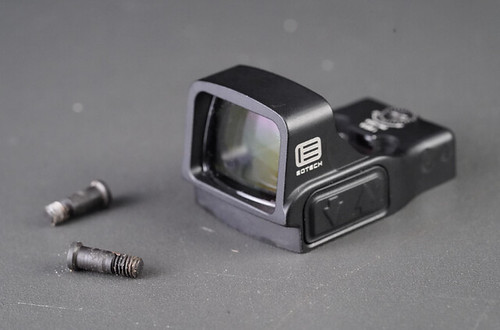
The EFLX brings EOTECH's optics expertise into the pistol red dot market with a large window and user-friendly controls.
Specifications
- Footprint: DeltaPoint Pro
- Large viewing window
- Top-loading battery
- Aluminum housing
- Multiple brightness settings
Pros
- Excellent sight picture
- Top battery access
- Easy controls
- Clear glass
Cons
- Newer design than established competitors
- DPP footprint limits plate availability
My Hands-On Notes
The large window supports fast dot acquisition. Brightness controls are intuitive and easy to manipulate with gloves. Lens tint is minimal compared to many competitors.
I observed excellent recoil management and consistent zero retention. Parallax characteristics are well controlled, and window distortion is minimal even near the edges.
What People Say Online
Most owners highlight the clear glass and generous window size. The optic has gained popularity among shooters seeking a modern alternative to the DeltaPoint Pro.
Mounting Clarity
Because it shares the DeltaPoint Pro footprint, ensure your Rock Island mounting solution supports DPP-compatible optics.
-----➤ Explore User Feedback and Current Pricing on Amazon
How I Tested / Evaluation Criteria
Parallax
All pistol red dots exhibit some level of parallax shift, particularly at close distances. I evaluated each optic by deliberately moving the dot within the viewing window while maintaining a fixed target reference. The best performers minimized apparent point-of-impact deviation.
Co-Witness and Deck Height
Deck height significantly affects presentation speed and backup sight visibility. Lower-mounted optics generally produce a more natural sight picture and simplify co-witness setups.
Durability
I prioritized optics with proven slide-mounted track records. Repeated recoil cycles on a .45 ACP 1911 create substantial stress, making durability a critical consideration.
Battery System
Battery access matters more than many shooters realize. Top-loading and side-loading designs reduce maintenance complexity and eliminate the need to confirm zero after battery replacement.
Brightness Range
A quality optic must remain visible under bright sunlight while offering settings low enough for indoor use. Consistent brightness adjustments improve overall usability.
Glass Quality
I evaluated lens clarity, edge distortion, tint levels, and coating performance. Superior glass helps shooters track the dot more effectively during rapid fire.
Controls Ergonomics
Button size, placement, and tactile response affect real-world performance. Controls must remain usable while wearing gloves or operating under stress.
Mounting Ecosystem
The strongest optics ecosystems provide abundant plates, milling options, backup sight solutions, and aftermarket support. RMR-footprint optics continue to dominate this category.
How to Choose the Right Red Dot for This Gun
Rock Island 1911 pistols vary significantly in their optics readiness. Some models arrive optics-ready from the factory, while others require custom slide milling or dovetail adapter plates.
The first consideration should always be footprint compatibility. RMR-footprint optics dominate the market and offer the largest selection of mounting plates. If you anticipate upgrading optics later, choosing an RMR-compatible cut provides the greatest flexibility.
The second factor is intended use. For concealed carry or defensive applications, durability should take priority over window size. Optics such as the Trijicon RMR Type 2 and Aimpoint ACRO P-2 excel in these roles because they have extensive real-world durability records.
Competition shooters often prioritize window size and speed. Larger optics such as the HE507COMP and DeltaPoint Pro allow easier dot tracking during rapid strings of fire and faster target transitions.
Battery management is another important consideration. Side-loading batteries, like those found on many Holosun models, simplify maintenance. Top-loading systems also reduce downtime. Bottom-loading designs often require optic removal, which can complicate maintenance.
Co-witness capability should not be overlooked. Lower deck heights generally create a more natural presentation while allowing iron sights to remain visible. Taller enclosed-emitter optics may require suppressor-height sights to achieve a useful co-witness picture.
Environmental conditions matter as well. Open-emitter optics offer lighter weight and lower profiles, but enclosed-emitter designs provide better resistance to rain, mud, lint, and debris. Shooters who carry daily often benefit from the additional protection.
Finally, consider long-term support. Established footprints such as RMR and DeltaPoint Pro have extensive aftermarket ecosystems. This makes future upgrades and mounting solutions easier to source.
FAQs
Can a Rock Island 1911 accept a red dot without slide milling?
Yes. Many owners use dovetail adapter plates that replace the rear sight. However, direct milling generally provides a stronger and lower mounting solution.
Which footprint is best for a Rock Island 1911?
The RMR footprint remains the most versatile because of its extensive mounting ecosystem and optic selection.
Are enclosed-emitter optics worth it on a 1911?
For duty or carry use, enclosed emitters offer meaningful protection against debris and moisture. The ACRO P-2 is a leading example.
What dot size works best on a 1911?
Most shooters perform well with 3–3.5 MOA dots. Larger dots can improve speed, while smaller dots provide greater precision.
Will a red dot affect reliability?
A properly mounted optic should not affect reliability. Quality mounting plates, proper torque specifications, and thread locker are critical.
Conclusion
Finding the Best Red Dot for Rock Island 1911 ultimately comes down to balancing durability, footprint compatibility, viewing window size, and intended use. For most shooters, the Holosun 507C offers the strongest value, while the Trijicon RMR Type 2 remains the benchmark for durability. Those wanting maximum environmental protection should strongly consider the Aimpoint ACRO P-2, while competitors may prefer the large windows offered by the HE507COMP or DeltaPoint Pro. With the right mounting solution and optic footprint, a Rock Island 1911 can become an exceptionally capable red-dot-equipped pistol.
*