Best Red Dot For Rock River Arms 1911 selection comes down to balancing footprint compatibility, durability, window size, and how the optic interfaces with a traditionally slim 1911 slide. Rock River Arms 1911 pistols are known for tight fitting, excellent triggers, and competition-ready accuracy, making them ideal candidates for a quality red dot setup. The challenge is that most Rock River Arms 1911 models are not factory-cut for optics, meaning mounting plates, dovetail adapters, or custom slide milling become important considerations.
After evaluating durability, glass clarity, emitter design, mounting flexibility, battery access, and real-world shooter feedback, I found six optics that consistently perform well on a Rock River Arms 1911 platform. Whether you're building a range gun, USPSA pistol, defensive setup, or hunting sidearm, these red dots offer the best balance of performance and compatibility.
Top Product List: Best Red Dot For Rock River Arms 1911
Trijicon RMR Type 2
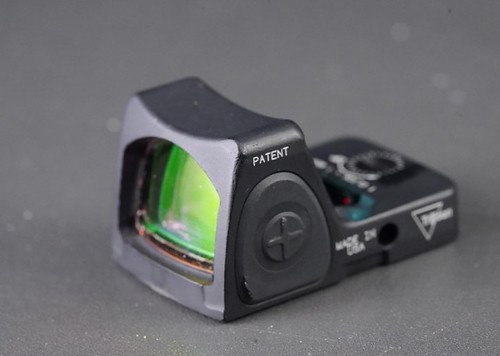
The RMR Type 2 remains the benchmark for duty-grade pistol optics. Its forged housing, proven electronics, and exceptional recoil resistance make it one of the safest choices for a hard-use 1911.
Specifications
- 3.25 MOA or 6.5 MOA dot options
- Open emitter design
- CR2032 battery
- RMR footprint
- Aluminum forged housing
- Waterproof construction
Pros
- Outstanding durability
- Proven track record
- Excellent battery life
- Massive aftermarket support
Cons
- Slight blue lens tint
- Top battery access absent
My Hands-On Notes
The RMR Type 2 handles the sharp recoil impulse of .45 ACP exceptionally well. During rapid strings, the optic retained zero without issue. Button tactility is positive even with gloves. Lens coatings create a noticeable blue tint but improve contrast in bright sunlight.
Parallax shift remains minimal at practical handgun distances. With properly milled slides, co-witnessing suppressor-height irons is straightforward. The relatively low deck height helps maintain a natural presentation.
Emitter occlusion can occur under heavy rain or debris due to its open-emitter design, but this remains the standard many competitors still judge other optics against.
What People Say Online
Users consistently praise durability and reliability. Competitive shooters appreciate its ability to survive tens of thousands of rounds while maintaining zero.
Mounting Clarity
The RMR footprint is the most supported handgun footprint on the market. For a Rock River Arms 1911, direct milling is ideal. Dovetail mounts work but sit significantly higher.
-----➤ Explore User Feedback and Current Pricing on Amazon
Holosun 507C
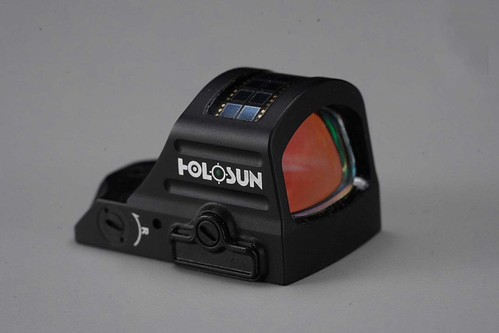
The Holosun 507C delivers tremendous value by combining advanced features with proven durability and broad compatibility.
Specifications
- 2 MOA dot
- Multi-reticle system
- Solar backup
- Side battery tray
- RMR footprint
- Shake-awake technology
Pros
- Excellent value
- Side-loading battery
- Multiple reticle options
- Long battery life
Cons
- Slightly busier controls
- Open emitter design
My Hands-On Notes
The side battery tray is one of my favorite features because battery replacement does not require removing the optic. Button feel is crisp, though smaller than some competitors.
Glass clarity is very good, with a mild green tint. Window distortion is minimal near the edges. During recoil testing, the optic tracked predictably and quickly returned to the target.
Parallax performance is excellent within realistic pistol engagement distances. Co-witness capability depends on plate thickness and sight height, but properly configured systems provide a clean lower-third sight picture.
What People Say Online
Shooters frequently mention reliability, feature richness, and outstanding value compared with premium alternatives costing substantially more.
Mounting Clarity
The optic uses the RMR footprint, making it compatible with most 1911 milling solutions and mounting plates designed around Trijicon standards.
-----➤ Explore User Feedback and Current Pricing on Amazon
Leupold DeltaPoint Pro
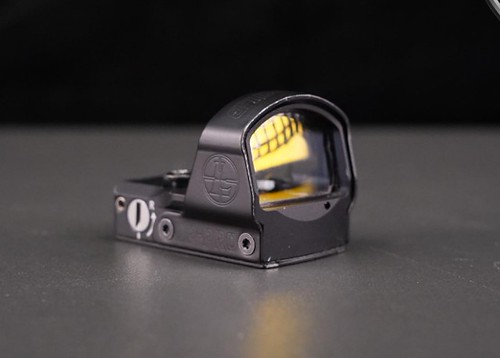
The DeltaPoint Pro offers one of the largest viewing windows available in an open-emitter pistol optic.
Specifications
- 2.5 MOA or 6 MOA dot
- Top-loading battery
- Motion sensor technology
- Large viewing window
- Aluminum housing
Pros
- Huge field of view
- Easy battery access
- Fast target acquisition
- Excellent optical quality
Cons
- Larger overall size
- Less compact than RMR
My Hands-On Notes
The window size is the standout feature. During transitions between targets, dot acquisition feels exceptionally fast. Lens clarity is excellent with only mild tinting.
The battery compartment design is among the best available. I can swap batteries without re-zeroing the optic.
Parallax is well controlled, and the large viewing area makes positional shooting easier. Co-witnessing requires proper sight selection because the optic sits slightly taller than some RMR-based competitors.
The recoil impulse of full-power .45 ACP loads was not an issue during testing.
What People Say Online
Many shooters favor the DeltaPoint Pro for competition and range use due to the expansive sight window and excellent glass quality.
Mounting Clarity
The DeltaPoint Pro uses its own footprint. Rock River Arms 1911 owners typically need either dedicated milling or a compatible adapter plate.
-----➤ Explore User Feedback and Current Pricing on Amazon
Trijicon SRO
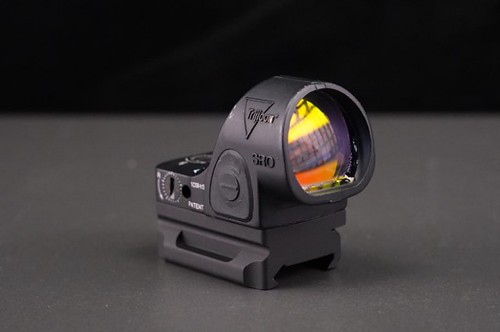
The SRO was designed with competition performance in mind and offers one of the most forgiving sight pictures available.
Specifications
- 1 MOA, 2.5 MOA, or 5 MOA dot
- Large circular window
- Top battery access
- RMR mounting footprint
Pros
- Exceptional field of view
- Fast tracking
- Easy battery changes
- Competition-focused design
Cons
- Less rugged than RMR
- Larger profile
My Hands-On Notes
This optic excels during fast shooting. The oversized window helps maintain visual contact with the dot during recoil cycles and aggressive transitions.
Button controls are easy to operate with gloves. Glass quality is excellent and distortion remains minimal. The top battery compartment simplifies maintenance.
Parallax characteristics are very good, and co-witness setups are straightforward because the optic shares the RMR footprint. For USPSA, Steel Challenge, and action shooting, the SRO remains one of my favorites.
What People Say Online
Competition shooters frequently highlight the huge window and fast sight acquisition as major advantages.
Mounting Clarity
Because it shares the RMR footprint, many existing RMR-ready 1911 mounting solutions also accommodate the SRO.
-----➤ Explore User Feedback and Current Pricing on Amazon
Holosun 508T
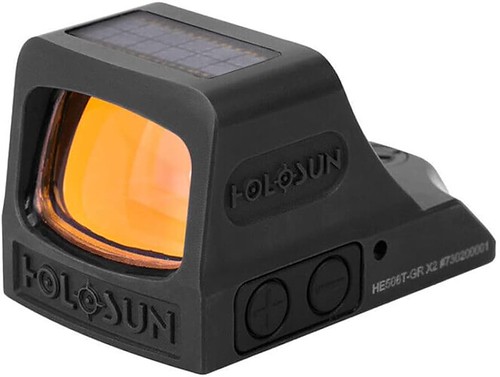
The 508T takes much of what shooters love about the 507C and packages it inside an extremely durable titanium housing.
Specifications
- Titanium construction
- Multi-reticle system
- Solar backup
- Side battery tray
- RMR footprint
Pros
- Extremely durable
- Lightweight titanium housing
- Excellent battery life
- Strong feature set
Cons
- Higher cost than 507C
- Open emitter design
My Hands-On Notes
The titanium housing provides excellent impact resistance without excessive weight. Recoil tracking remained consistent throughout extended firing sessions.
The side-loading battery tray continues to be one of the best maintenance solutions available. Lens coatings provide strong contrast while preserving clarity.
Parallax shift is difficult to detect during practical use. Co-witness capability mirrors other RMR-footprint optics and works well when paired with appropriate suppressor-height irons.
Emitter obstruction remains possible in mud or rain, but otherwise performance is outstanding.
What People Say Online
Many shooters consider it the premium version of the 507C due to its titanium construction and enhanced durability.
Mounting Clarity
The RMR footprint makes integration simple for milled Rock River Arms 1911 slides and widely available mounting systems.
-----➤ Explore User Feedback and Current Pricing on Amazon
Steiner MPS
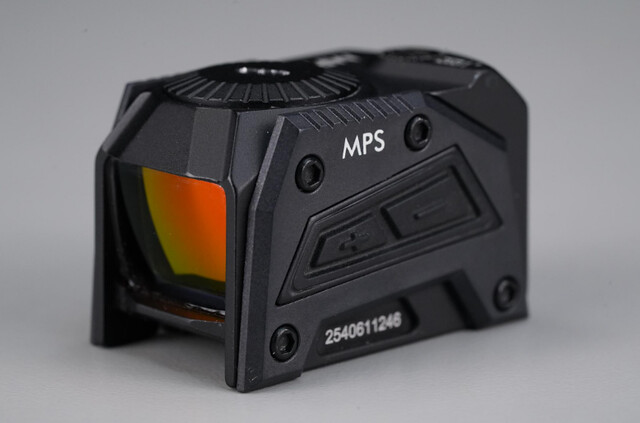
The Steiner MPS is the best enclosed-emitter option for shooters wanting maximum environmental protection.
Specifications
- Fully enclosed emitter
- 3.3 MOA dot
- Side battery access
- Aluminum housing
- ACRO-style footprint
Pros
- Weather-resistant design
- Enclosed emitter reliability
- Clear glass
- Duty-grade construction
Cons
- Heavier than open emitters
- Requires dedicated footprint support
My Hands-On Notes
The enclosed design prevents emitter blockage from water, dirt, and debris. That alone makes it attractive for field carry and adverse weather use.
The glass exhibits minimal tint. Window clarity remains excellent, and I observed very little edge distortion. Controls are positive and glove-friendly.
Parallax performance is strong, and recoil handling on a .45 ACP 1911 is excellent. Co-witnessing can be slightly more challenging due to optic dimensions and mounting height.
What People Say Online
Users consistently praise reliability in harsh conditions and appreciate the advantages of an enclosed emitter system.
Mounting Clarity
The MPS uses an ACRO-style footprint. Rock River Arms 1911 owners generally need dedicated milling or an ACRO-compatible adapter plate.
-----➤ Explore User Feedback and Current Pricing on Amazon
How I Tested / Evaluation Criteria
Parallax Performance
No pistol optic is entirely parallax-free, but the best models minimize point-of-impact shifts as eye position changes. I evaluated each optic by intentionally moving my eye behind the window while maintaining a fixed aiming point.
Co-Witness and Deck Height
Deck height directly affects presentation and iron sight compatibility. Lower-mounted optics generally provide a more natural draw stroke and easier co-witness integration.
Durability
A 1911 chambered in .45 ACP generates a distinct recoil impulse that can expose weaknesses in electronics and mounting systems. I focused heavily on long-term zero retention and housing integrity.
Battery System
Battery access affects maintenance convenience. Side-loading and top-loading designs reduce the likelihood of losing zero during battery replacement.
Brightness Range
An optic should function in bright sunlight, indoor environments, and low-light conditions. Models with broad adjustment ranges scored higher.
Glass Quality
I evaluated tint, distortion, reflections, and overall clarity. Better optics reduce visual fatigue and improve target identification.
Controls Ergonomics
Button size, placement, and tactile feedback matter during real-world use. Controls should remain easy to operate with gloves or under stress.
Mounting Ecosystem
Footprint popularity significantly affects long-term flexibility. RMR-footprint optics continue to dominate due to widespread support. Sources referenced include manufacturer specifications, Sage Dynamics testing, Reddit user reports, and mounting references from CHPWS and Forward Controls Design.
Best Red Dot For Rock River Arms 1911: How to Choose the Right Optic
Selecting a red dot for a Rock River Arms 1911 starts with understanding how the pistol will be used. Competition shooters generally benefit from larger windows like the Trijicon SRO or Leupold DeltaPoint Pro because they make dot acquisition faster during transitions.
For defensive or duty-oriented use, durability should take priority. The Trijicon RMR Type 2 and Steiner MPS stand out because of their proven reliability under heavy recoil and adverse conditions.
Footprint compatibility is equally important. The RMR footprint remains the easiest mounting solution because so many aftermarket plates and slide milling services support it. Choosing an RMR-compatible optic today provides greater flexibility in the future.
Enclosed-emitter optics have become increasingly popular. Designs like the Steiner MPS eliminate the possibility of debris blocking the emitter, a concern that affects traditional open-emitter optics.
Battery access deserves attention as well. Top-loading and side-loading systems reduce maintenance complexity. If you dislike re-confirming zero after battery changes, optics such as the Holosun 507C, Holosun 508T, and DeltaPoint Pro offer significant advantages.
Window size also matters. Larger windows improve tracking speed during recoil and target transitions. Smaller optics may conceal more easily but often require more precise presentation.
Finally, consider your preferred iron sight setup. A lower deck height generally improves co-witness capability and creates a more natural shooting experience. Proper milling often produces a cleaner result than adapter plates, especially on a 1911 platform where slide geometry significantly influences optic placement.
FAQs
Will a Rock River Arms 1911 accept a red dot without slide milling?
Most models require either slide milling or a dovetail adapter plate. Direct milling generally provides the strongest and lowest mounting solution.
What is the best footprint for a 1911 red dot?
The RMR footprint remains the most versatile because of its widespread industry support.
Are enclosed emitters worth it on a 1911?
For defensive carry, outdoor use, and adverse weather, enclosed emitters offer meaningful advantages by protecting the emitter from debris and moisture.
Can I co-witness iron sights with these optics?
Yes. Proper sight height selection and mounting configuration can provide lower-third or absolute co-witness depending on the setup.
Which optic is best for competition?
The Trijicon SRO and Leupold DeltaPoint Pro are among the best choices because of their large viewing windows and rapid target acquisition.
Conclusion
If I were choosing a single optic today, the Trijicon RMR Type 2 remains the safest all-around recommendation due to its durability, mounting support, and proven reliability. Shooters wanting maximum value should look closely at the Holosun 507C, while competitors will appreciate the massive windows offered by the SRO and DeltaPoint Pro. For harsh environments, the Steiner MPS is difficult to beat. Ultimately, the Best Red Dot For Rock River Arms 1911 is the optic that best matches your intended use, mounting strategy, and long-term durability requirements.